SMA syndrome and duodenojejunostomy: video explainer
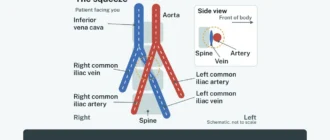
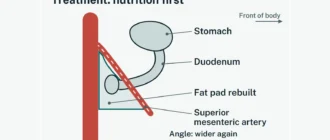
A short captioned video, about a minute and a half, with no sound. It shows how weight loss lets the superior mesenteric artery squeeze the duodenum, why treatment starts with nutrition, and how a duodenojejunostomy bypass is done, step by step.
Chapters
- Normal anatomy
- Weight loss shrinks the fat
- The duodenum is squeezed
- Treatment: nutrition first
- Surgery: Where the squeeze is
- Surgery: Keyhole or open surgery
- Surgery: Joining the jejunum
- Surgery: Food bypasses the squeeze
Full transcript
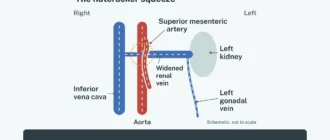
- 0:03 The superior mesenteric artery leaves the aorta at an angle, with a pad of fat between them.
- 0:10 Part of the duodenum crosses through that space.
- 0:13 After fast or large weight loss the fat pad shrinks and the angle narrows.
- 0:19 In SMA syndrome the angle is typically under 22 degrees.
- 0:23 The duodenum is pinched, so food has trouble passing.
- 0:27 Pain, nausea and vomiting after meals and early fullness are common.
- 0:31 Treatment usually starts with nutrition, often through a feeding tube.
- 0:35 If this fails, surgery is used, most often a duodenojejunostomy bypass.
- 0:43 The squeeze is in the third part of the duodenum; the part before it widens.
- 0:48 Duodenojejunostomy is the most common operation when nutrition fails.
- 0:52 It is often done by keyhole surgery, sometimes robotic, or open.
- 0:57 In one small series, hospital stay was about 3 days after keyhole surgery, 7 after open.
- 1:03 A loop of the jejunum, the next part of the small bowel,
- 1:08 is joined side to side with the widened duodenum, often with a stapler.
- 1:14 Food now goes around the pinched part.
- 1:16 A review reports success in 80% to 100%; results are worse with a gut motility disorder.
About this video
- The drawings are schematic and not to scale. Each step is based on published research; the sources are listed with the same steps in our SMA syndrome guide.
- Numbers in the video come from single studies and are examples, not predictions for one person.
- This video is educational only and is not medical advice. Talk with your doctor about your own situation.
See also: SMA syndrome treatment results from every published study and US hospitals that publish on it.
MALS Compass is an independent educational website, not a medical provider, and is not affiliated with any hospital, clinic or university. This page is educational information and does not replace advice from your own doctor. For any question about your health, please contact your doctor or an official healthcare institution.