The research gap: how little is known about MALS and its relatives
People with median arcuate ligament syndrome (MALS) and related compression syndromes often hear that "there is not much research". This page shows what that means in numbers, using public data from the U.S. National Institutes of Health (NIH), ClinicalTrials.gov and PubMed. The table updates automatically.
Key points
- NIH RePORTER, the public database of NIH-funded research, lists no projects that mention MALS, SMA syndrome or nutcracker syndrome in their title, terms or abstract (see the table for the current count).
- Only a handful of clinical studies are registered for each condition, and few of them are randomized trials.
- Most published papers are case reports and small series from single hospitals, which is one reason doctors disagree on diagnosis and treatment.
The numbers
| Condition | NIH-funded projects | Registered clinical studies | Open or opening | Publications last full year |
|---|---|---|---|---|
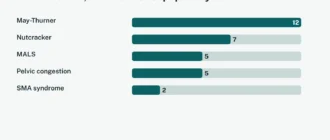
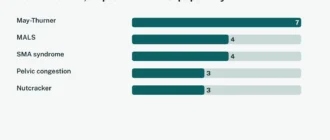
| MALS (median arcuate ligament syndrome) | 0 | 4 | 3 | 81 |
| SMA syndrome (Wilkie syndrome) | 0 | 5 | 2 | 73 |
| Nutcracker syndrome | 0 | 3 | 1 | 82 |
| May-Thurner syndrome (iliac vein compression) | 3 | 19 | 3 | 108 |
| Pelvic congestion syndrome | 1 | 29 | 8 | 67 |
Sources: NIH RePORTER (projects whose title, terms or abstract contain the condition name, all years), ClinicalTrials.gov, PubMed. Checked November 9, 2026.
What the numbers mean for patients
When research is scarce, guidelines rely on expert opinion and small studies, and different hospitals may use different tests and thresholds. In practice this means:
- it is reasonable to ask a doctor what their recommendation is based on, and how many patients with your condition they have seen;
- a second opinion from a center that regularly treats these conditions can be helpful before major surgery;
- joining a registry or study, if one fits you, helps the next patient get clearer answers.
How the numbers are counted
- NIH-funded projects: projects in NIH RePORTER whose title, scientific terms or abstract contain the condition name, across all years. Broader projects (for example on chronic abdominal pain) are not counted.
- Registered clinical studies: studies on ClinicalTrials.gov for the condition, after removing studies that only mention it in passing. The full list is on our clinical trials tracker.
- Publications: papers indexed in PubMed for the last full calendar year, by the condition's name and medical subject heading. See the research tracker for the trend and the newest papers.
MALS Compass is an independent educational website, not a medical provider, and is not affiliated with any hospital, clinic or university. This page is educational information and does not replace advice from your own doctor. For any question about your health, please contact your doctor or an official healthcare institution.