Nutcracker syndrome and renal vein transposition: video explainer
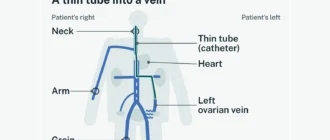
A short captioned video, about a minute and a half, with no sound. It shows how the left kidney vein is squeezed between two arteries, where the blood goes instead, and how left renal vein transposition surgery is done, step by step.
Chapters
- Normal anatomy
- The nutcracker squeeze
- Blood takes other routes
- One treatment: vein transposition
- Surgery: Reaching the vein
- Surgery: Clamping and dividing
- Surgery: Reattaching it lower
- Surgery: After the operation
Full transcript
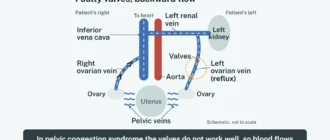
- 0:03 The left renal vein carries blood from the left kidney to the inferior vena cava.
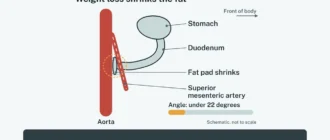
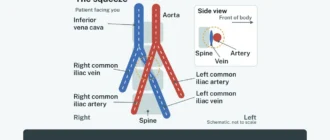
- 0:09 On the way it crosses in front of the aorta, under the superior mesenteric artery.
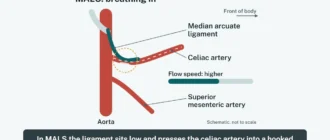
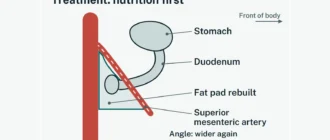
- 0:15 In nutcracker syndrome the vein is pinched between the two arteries,
- 0:19 most often because the angle between them is narrow. The kidney side widens.
- 0:25 Pressure builds up and blood can flow backward into the ovarian or testicular vein.
- 0:30 In a 250-patient study, 48% had blood in the urine.
- 0:35 In vein transposition, surgeons sew the vein back on lower, away from the squeeze.
- 0:40 A review of 24 studies: symptoms resolved in 92%, 28.5% needed another procedure.
- 0:48 The surgeon reaches the vein through the abdomen.
- 0:52 The operation can be open, laparoscopic or robotic.
- 0:55 Clamps hold back the blood.
- 0:58 The vein is cut where it joins the vena cava.
- 1:02 The vein is sewn onto the vena cava lower down.
- 1:06 If it is too short or scarred, a patch or graft may be added.
- 1:12 Blood from the kidney now drains without passing the squeeze.
- 1:16 In one center, 87% of 37 patients improved; about one in three needed a later procedure.
About this video
- The drawings are schematic and not to scale. Each step is based on published research; the sources are listed with the same steps in our nutcracker syndrome guide.
- Numbers in the video come from single studies and are examples, not predictions for one person.
- This video is educational only and is not medical advice. Talk with your doctor about your own situation.
See also: nutcracker treatment results from every published study and US hospitals that publish on it.
MALS Compass is an independent educational website, not a medical provider, and is not affiliated with any hospital, clinic or university. This page is educational information and does not replace advice from your own doctor. For any question about your health, please contact your doctor or an official healthcare institution.