Duodenojejunostomy: SMA syndrome surgery explained
Duodenojejunostomy is the operation most often used for superior mesenteric artery (SMA) syndrome, a rare condition in which the duodenum (the first part of the small intestine) is pinched between the aorta and the SMA [1]. The surgeon joins the swollen duodenum to the next loop of small intestine, the jejunum, so that food can flow around the pinched spot instead of through it [4][17].
This page explains when SMA syndrome surgery is considered, how a duodenojejunostomy is done, what recovery looks like, what the studies report, and how it compares with other operations. For the condition itself, see our SMA syndrome guide.
Key points
- Treatment usually starts with nutrition support; surgery is considered when that does not work [1][2].
- Duodenojejunostomy creates a bypass from the duodenum to the jejunum, past the artery, and is the most common operation for SMA syndrome [1][17].
- It is often done by keyhole (laparoscopic) surgery, sometimes with a surgical robot [2][5].
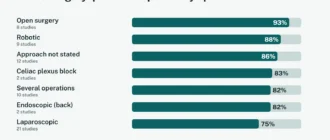
- In our summary of published studies, 82% of 246 surgery patients improved, but every study was small.
- Some people keep having nausea after surgery, often because the stomach and gut move food too slowly (a motility disorder) [1][7].
What the operation does
In SMA syndrome the third part of the duodenum is squeezed where it passes under the SMA. Food and stomach juices back up, which leads to pain after meals, vomiting and weight loss [1]. A duodenojejunostomy does not move the artery. Instead, the surgeon makes a new opening between the widened duodenum above the squeeze and a loop of jejunum just below it, so food has a second, open path [17].
A review of the surgical literature calls duodenojejunostomy the preferred operation and reports that it can give lasting relief and better quality of life, while noting that the published evidence is limited [1].
When surgery is considered
Most people are treated first without surgery. This usually means nutrition support, often liquid feeding through a thin tube placed past the squeeze into the jejunum, with the goal of rebuilding the fat pad that normally holds the artery away from the duodenum [1]. A review reports that this conservative approach works in about 70% to 80% of patients [2].
Surgery is considered when symptoms continue despite this treatment [1][2]. People who are very malnourished may need a period of feeding to get stronger before the operation; one series of 22 patients described this kind of preparation for the sickest patients [15]. Studies stress checking for other causes of slow digestion before surgery, because patients with a stomach or gut that does not move food well (a motility disorder) did worse after a bypass [7][8]. Our SMA syndrome diet page covers eating and nutrition before surgery.
Laparoscopic, robotic or open
The operation can be done through one larger cut (open surgery) or through several small cuts with a camera (laparoscopic surgery). Robotic surgery is a type of keyhole surgery in which the surgeon controls the instruments through a robot.
- Laparoscopic: in one series of 12 patients, the average hospital stay was 4.2 days and there were no leaks from the new connection; the authors favored this approach over traditional open surgery because of the shorter stay and few complications [4].
- Robotic: in a series of 14 patients, 2 operations were done with robotic help and the rest laparoscopically [5]. Robotic results are reported mostly in small series.
- Open: still used when keyhole surgery is not possible, for example when scar tissue from earlier surgery is in the way [14].
How it is done, in simple terms
- You are fully asleep under general anesthesia.
- The surgeon lifts the large bowel to see the widened duodenum [17].
- A loop of jejunum is brought up next to the duodenum, and the two are joined side by side, often with a stapling device, and the remaining opening is closed with stitches [17].
- In reported series the operation took on average about 1 to 2 hours [4][5][17].
Duodenojejunostomy, step by step (4 steps)

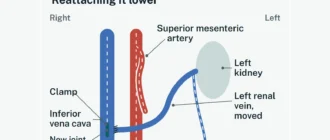
1. Where the squeeze is. In SMA syndrome the third part of the duodenum is pinched between the artery and the aorta, and the part before it widens. When nutrition treatment fails, the most common operation is a duodenojejunostomy. Source: study 1, study 2.

2. Keyhole or open surgery. The operation is often done by keyhole (laparoscopic) surgery, sometimes with a robot, or as open surgery. In one small series, keyhole patients went home after about 3 days and open surgery patients after about 7. Source: study 1, study 2, study 3.


Prefer a video? Watch the 90-second captioned video explainer.
Hospital stay, recovery and eating after surgery
In a systematic review of SMA syndrome surgery, the median hospital stay was 5 days [3]. Individual series report averages from about 3 to 6 days [4][5][8].
Eating is restarted step by step, and plans differ between hospitals; in one series of children (after a different operation, duodenal derotation) a clear liquid diet started 2 days after surgery [16]. A slow return of bowel function can happen early on: in one series it happened in 5 of 22 patients, and none had a serious complication [15]. In another series, 2 of 18 patients were readmitted within a month because they could not eat and drink enough [6]. Weight gain after surgery tends to be gradual; in two series the average gain was about 2 to 4 kg over roughly two years [5][6]. Ask your surgical team for a written eating plan, and see our diet page for general tips.
Results
Our team collected every published study we could find on SMA syndrome treatment. See our summary of every published study for the full table. These are all small, mostly single-center studies, so the numbers can change as new reports come in.
| Operation | Studies with a rate | Patients | Improved (weighted) |
|---|---|---|---|
| All SMA syndrome surgery | 17 | 246 | 82% |
| Laparoscopic duodenojejunostomy | 6 | 77 | 66% (range 33% to 92%) |
| Duodenal derotation / transposition | 3 | 58 | 93% |
| Strong procedure | 2 | 11 | 91% |
In the same dataset, the median rate of symptoms coming back was 10% (5 studies). Results differ a lot between centers. One series of 12 patients reported improvement in 92% [4], while another of 18 patients found that 14 improved at first but only 6 still reported improvement at their latest visit, about two years later [6]. In a long-term study of 25 patients followed for a median of 5 years, pain, nausea and weight loss improved overall, but 7 patients later needed major surgery for motility disorders, and this group had worse outcomes [7]. Another series of 13 patients followed for about 8 years reported excellent results in 62% [8].
Risks
A systematic review of surgical studies reported major complications in about 2% of SMA syndrome patients and a death rate of 0.4%; 5% needed another procedure for ongoing symptoms [3]. Problems reported in individual series include:
- slow return of bowel function or slow stomach emptying after surgery [8][15];
- narrowing of the new connection, treated in one patient by stretching it with a balloon during an endoscopy [5];
- dumping syndrome (cramps, sweating or diarrhea after eating) in one patient [5];
- bowel blockage from scar tissue [6];
- symptoms that continue because of a motility disorder rather than the squeeze itself [1][7].
Other operations and how they differ
- Strong procedure (duodenal release): the surgeon cuts the ligament of Treitz, a band that holds the duodenum up, so the duodenum can drop or turn away from the artery [11]. No new connection is made in the bowel. In a series of 20 children and young adults, symptoms resolved in 60%, and some later needed a duodenojejunostomy [12].
- Duodenal derotation: the duodenum is freed and moved so it no longer runs under the SMA. In one series it relieved symptoms in 18 of 19 patients [9]. A recent robotic series of 33 patients combined derotation with a new duodenum-to-duodenum connection; 91% reported much less pain, and 19 had MALS surgery at the same time [10]. Derotation without any new bowel connection avoids the risk of a leak from that connection; in a series of 15 children it gave lasting improvement in most [16].
- Gastrojejunostomy: a bypass from the stomach, not the duodenum, to the jejunum. In a large single-center series of 66 patients, surgeons chose between duodenojejunostomy, gastrojejunostomy or both based on each patient's history and symptoms [13]. It has also been used when scar tissue made a duodenojejunostomy impossible [14].
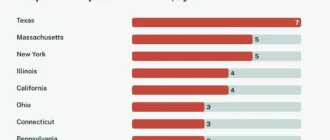
No trials compare these operations head to head, so the choice depends on the patient and on the surgeon's experience. See US hospitals that publish on SMA syndrome.
Questions to ask your doctor
- Have I tried enough nutrition support, and how did we measure whether it worked?
- Have I been tested for gastroparesis or other motility disorders before surgery?
- Which operation do you suggest, and why that one for me?
- Will it be laparoscopic, robotic or open, and how many of these operations have you done?
- How will I eat in the first weeks, and who do I call if I cannot keep food down?
- What happens if my symptoms come back?
Related pages: SMA syndrome guide, eating with SMA syndrome, SMA syndrome treatment results, SMA syndrome treatment centers.
Sources
- Maria MS, Anoosh F, Houssam O, et al. Superior mesenteric artery syndrome: a contemporary review of diagnosis and surgical management. J Gastrointest Surg. 2026;30(9):102506. PubMed 42501657
- Oka A, Awoniyi M, Hasegawa N, et al. Superior mesenteric artery syndrome: Diagnosis and management. World J Clin Cases. 2023;11(15):3369-3384. PubMed 37383896
- Jonas JP, Rossler F, Ghafoor S, et al. Surgical therapy of celiac axis and superior mesenteric artery syndrome. Langenbecks Arch Surg. 2023;408(1):59. PubMed 36690823
- Pottorf BJ, Husain FA, Hollis HW Jr, et al. Laparoscopic management of duodenal obstruction resulting from superior mesenteric artery syndrome. JAMA Surg. 2014;149(12):1319-22. PubMed 25353279
- Sun Z, Rodriguez J, McMichael J, et al. Minimally invasive duodenojejunostomy for superior mesenteric artery syndrome: a case series and review of the literature. Surg Endosc. 2015;29(5):1137-44. PubMed 25701058
- Chang J, Boules M, Rodriguez J, et al. Laparoscopic duodenojejunostomy for superior mesenteric artery syndrome: intermediate follow-up results and a review of the literature. Surg Endosc. 2017;31(3):1180-1185. PubMed 27405482
- Wills MV, Barajas-Gamboa JS, Mocanu V, et al. Long-term outcomes of laparoscopic duodenojejunostomy for superior mesenteric artery syndrome. Surg Endosc. 2025;39(8):5235-5243. PubMed 40576774
- Cienfuegos JA, Hurtado-Pardo L, Valenti V, et al. Minimally Invasive Surgical Approach for the Treatment of Superior Mesenteric Artery Syndrome: Long-Term Outcomes. World J Surg. 2020;44(6):1798-1806. PubMed 32030438
- Ha CD, Alvear DT, Leber DC. Duodenal derotation as an effective treatment of superior mesenteric artery syndrome: a thirty-three year experience. Am Surg. 2008;74(7):644-53. PubMed 18646483
- Lozano GV, Chen SC, Shouhed D. Can Duodenal Derotation With Duodenoduodenostomy Be Performed Safely Robotically, and Is It the Optimal Surgical Intervention for SMAS? Am Surg. 2026;92(11):2919-2926. PubMed 42112896
- Dekonenko C, Hill JA, Sobrino JA, et al. Ligament of Treitz Release With Duodenal Lowering for Pediatric Superior Mesenteric Artery Syndrome. J Surg Res. 2020;254:91-95. PubMed 32422431
- Saylors SA, St Peter SD. Surgical Management of Pediatric Superior Mesenteric Artery Syndrome: A Single Institution Continued Experience. J Laparoendosc Adv Surg Tech A. 2026;36(9):691-695. PubMed 42135200
- Lu SB, Guo YQ, Chen RY, et al. Laparoscopic Surgery for Superior Mesenteric Artery Syndrome. J Invest Surg. 2024;37(1):2387524. PubMed 39191411
- Kirby GC, Faulconer ER, Robinson SJ, et al. Superior mesenteric artery syndrome: a single centre experience of laparoscopic duodenojejunostomy as the operation of choice. Ann R Coll Surg Engl. 2017;99(6):472-475. PubMed 28660836
- Jain N, Chopde A, Soni B, et al. SMA syndrome: management perspective with laparoscopic duodenojejunostomy and long-term results. Surg Endosc. 2021;35(5):2029-2038. PubMed 32342220
- Chi Y, Chen W, Hao X, et al. Outcomes of Laparoscopic Duodenal De-Rotation for Superior Mesenteric Artery Syndrome in Children. Am Surg. 2026:31348261484512. PubMed 42673536
- Tang J, Zhang M, Zhou Y, et al. Laparoscopic lateral duodenojejunostomy for pediatric superior mesenteric artery compression syndrome: a cohort retrospective study. BMC Surg. 2023;23(1):365. PubMed 38049799
MALS Compass is an independent educational website, not a medical provider, and is not affiliated with any hospital, clinic or university. This page is educational information and does not replace advice from your own doctor. For any question about your health, please contact your doctor or an official healthcare institution.