MALS and compression syndrome research: September 2026
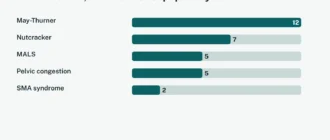
Every month we read every new paper on MALS, May-Thurner, nutcracker, pelvic congestion and SMA syndrome that was added to PubMed, the US National Library of Medicine database, and explain it in plain language. In September 2026, 30 papers were added; 21 of them are about these conditions and are summarized below, 12 of them case reports about one or two patients.
The month in brief
MALS (median arcuate ligament syndrome)
Certain spine surgery moves may push the celiac artery against the ligament
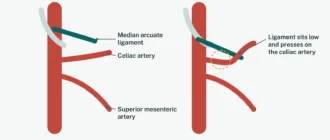
Researchers used one donated body to copy different spine correction surgeries and measured with CT how the celiac artery (a main gut artery) moved. One type of correction near the lower chest spine cut the distance between the artery and the median arcuate ligament from 8.8 mm to 2.6 mm. Other corrections did not shorten it.
Why it matters: It suggests some spine surgeries could raise the risk of artery compression, but this was tested in a single donated body and needs confirmation. Abstract on PubMed
Six patients did well after less invasive treatment for MALS
Doctors at one hospital in Moscow reviewed six patients treated for Dunbar syndrome, another name for MALS. Keyhole surgery to release the ligament, sometimes followed by a stent, gave good short- and long-term results. CT scans and ultrasound before and after helped show whether blood flow improved and whether a stent was needed.
Why it matters: It suggests less invasive treatment may be an option for MALS, but six patients is a very small group and more data are needed. Abstract on PubMed
Case reports (each describes one or two patients):
- This report describes one man with pancreatic cancer whose celiac artery was fully blocked by MALS. During cancer surgery, doctors cut the ligament, but blood flow to the liver stopped later in the operation. They rebuilt the artery using a leg vein. He went home after 18 days and had no cancer return at 22 months. Abstract on PubMed
- This report describes one woman with hypermobile Ehlers-Danlos syndrome (hEDS, a condition with very flexible joints) and long-lasting pain under the ribs. She had surgeries for nutcracker syndrome, MALS, a rib problem, and other diagnoses. Pain came back or stayed after each one. A trapped nerve in the belly wall was found later. Abstract on PubMed
Background: our guide to MALS.
May-Thurner syndrome
Pelvic vein stenting eased symptoms more than standard care alone
Researchers combined four studies with 554 patients who had long-lasting, symptomatic blockage of the iliac veins (main pelvic veins). Those treated with stenting or other vein procedures had lower symptom severity scores than those treated without procedures. Effects on pain and quality of life were unclear, and the largest trial found more bleeding with the procedure.
Why it matters: This offers modest support for vein procedures when other care has not helped, but the evidence was rated low quality and follow-up was short. Abstract on PubMed
Type of vein disease mattered more than stent design for outcomes
Researchers reviewed five large device studies with 945 patients who got vein stents for blocked pelvic and upper leg veins. After one year, stents stayed open in 95% to 100% of veins squeezed from outside, but in 70% to 83% of veins scarred by past clots. The stent's design did not clearly change results.
Why it matters: This suggests the cause of a vein blockage may predict how well a stent works, though no stent design was shown to be best. Abstract on PubMed
Vein stents for May-Thurner worked well despite known placement challenges
Doctors at one center followed 38 patients with May-Thurner syndrome without clots who received Wallstents (a type of mesh vein stent). The stents tended to shorten and slip during placement, which doctors handled during the procedure. Two stents moved, and both were fixed without open surgery. All patients with symptoms improved, and no stent clotted within one year.
Why it matters: Knowing how these stents behave may help doctors place them more safely, but this was one center and needs confirmation. Abstract on PubMed
Case reports (each describes one or two patients):
- This report describes one 71-year-old man in Japan with a large leg clot and a squeezed iliac vein that did not improve with blood thinners. Doctors pulled out the clot with a special device and placed a stent made for veins. His leg swelling improved right away, and his thigh and calf size went down by the next day. Abstract on PubMed
- This report describes one 59-year-old man with dizziness, double vision, and unsteady walking from a small stroke in the brainstem. Tests showed a PFO (a small opening between the upper heart chambers), which was later closed. He also had May-Thurner syndrome, which could have been a source of clots, but no clot was found. Abstract on PubMed
- This report describes one 47-year-old woman with a large clot in her left leg and pelvic veins. Scans showed a very enlarged fibroid uterus (a noncancerous growth) pressing on the left iliac vein. She was treated with blood thinners, a blood transfusion, and iron, then had her uterus removed about two months later. Abstract on PubMed
- This report describes one 32-year-old man who got a large left leg clot about 18 days after surgery to fix a broken thigh bone. A CT venogram (a scan of the veins) showed the left iliac vein squeezed by an artery, fitting May-Thurner syndrome. After clot removal and a stent, the clot was gone and the stent was open at one month. Abstract on PubMed
Background: our guide to May-Thurner syndrome.
Nutcracker syndrome
Case reports (each describes one or two patients):
- This report describes one 10-year-old boy with painless swelling of veins in the scrotum, called a varicocele. Because he was young, doctors used Doppler ultrasound (which shows blood flow) to check his kidney veins too. It showed the left kidney vein squeezed between two arteries, fitting nutcracker syndrome, even though his urine tests were normal. Abstract on PubMed
- This report describes one woman with posterior nutcracker syndrome, where the left kidney vein is squeezed behind the aorta. She had blood in her urine, side pain, and repeat urine infections. Doctors placed a stent in the kidney vein, which stayed open. Because she also had liver and kidney disease, her blood thinner plan was tailored to her bleeding risk. Abstract on PubMed
- This report describes one 35-year-old woman with belly pain that moved from the lower right to the left side, plus painful periods. Tests showed blood in her urine. A CT scan showed a squeezed left kidney vein and swollen ovarian and pelvic veins, fitting nutcracker syndrome leading to pelvic congestion syndrome (pain from swollen pelvic veins). Abstract on PubMed
Background: our guide to Nutcracker syndrome.
Pelvic congestion syndrome
Adding pelvic vein closure to stenting gave better short-term relief
In a small randomized trial, 20 women with pelvic vein problems and a narrowed iliac vein (main pelvic vein) got either a stent alone or a stent plus pelvic vein embolization (closing off leaky veins). All women in the combined group had lasting improvement, compared with half in the stent-only group. The combined procedure took longer.
Why it matters: This suggests treating both problems together may help some women more, but the trial was small and short-term, so results need confirmation. Abstract on PubMed
MRI flow measurements showed a pattern linked to pelvic vein disorders
Researchers reviewed a type of MRI that measures blood flow, without dye, in 428 women. Women with pelvic venous disorders (leaky, enlarged pelvic veins) showed a pattern of backward flow in the left ovarian vein and less flow in a main leg vein. These two signs were the most useful for telling them apart from others.
Why it matters: An objective flow test could one day help confirm pelvic vein disorders, though its accuracy was moderate and more study is needed. Abstract on PubMed
Doctors treat vulvar and pelvic-origin leg varicose veins in different ways
Researchers surveyed vascular specialists around the world about how they handle varicose veins of the vulva and legs that come from pelvic veins. Of 194 doctors who treat these women, about half started by treating pelvic veins first, while the rest injected the visible veins directly. Imaging choices and follow-up also varied a lot.
Why it matters: This shows there is no agreed best approach yet, which suggests patients may be offered different plans and that comparison studies are needed. Abstract on PubMed
Background: our guide to Pelvic congestion syndrome.
SMA syndrome
Thirteen adults with SMA syndrome had varied symptoms and treatments
Doctors at one emergency hospital in Romania reviewed 13 adults aged 19 to 85 with SMA syndrome. Almost all had belly pain, and about half had vomiting. Scans also showed a squeezed kidney vein in three people. Nine had surgery at some point, and four had medical care only. Follow-up details were limited.
Why it matters: It shows that SMA syndrome can appear at many ages and in different ways, but this small descriptive study cannot say which treatment works best. Abstract on PubMed
Case reports (each describes one or two patients):
- This report describes one woman with belly pain, nausea, and bloating after meals that eased when she lay curled on her left side. Scans fit SMA syndrome. Surgeons used a robot to free and lower the duodenum (first part of the small bowel), without a bypass. Six weeks later her symptoms were gone and she was eating better. Abstract on PubMed
- This report describes one 20-year-old woman with a flare of ulcerative colitis (a bowel inflammation disease) who also had weight loss, nausea, and vomiting. Scans showed SMA syndrome and a squeezed left kidney vein at the same time. The authors say having both is very rare. Abstract on PubMed
- This report describes one 10-year-old boy in Sudan with long-lasting vomiting and severe weight loss. A CT scan showed SMA syndrome. When nonsurgical care did not help, doctors connected the duodenum to the next part of the bowel to bypass the blockage, and his symptoms went away. Abstract on PubMed
Background: our guide to SMA syndrome.
How we write this digest
- We search PubMed for every paper added during the month, with the same searches we use for our outcome databases.
- Each summary is written by our editorial team from the paper's abstract only, in our own words. Full papers may contain more detail.
- We say how many patients a study included. Case reports and small studies cannot show how often something happens.
- New papers are not medical advice. Talk with your doctor before changing any treatment.
See also: live list of the newest papers, clinical trials tracker.
MALS Compass is an independent educational website, not a medical provider, and is not affiliated with any hospital, clinic or university. This page is educational information and does not replace advice from your own doctor. For any question about your health, please contact your doctor or an official healthcare institution.